



Connecting devices in your business
A Local Area Network (LAN) comprises cables, access points, switches, routers, and other components that enable devices to connect to internal and external applications via wide area networks.
Optimising network connectivity within your organisation will boost your productivity, with our network solutions we can help to ensure your organisation’s LAN is fully optimised and secure.


The development of LANs
Meanwhile, the growth of virtualisation has supported the development of virtual LANs, which enable network administrators to logically group network nodes and partition their networks without a need for major infrastructure changes.
For example, in an office with multiple departments, such as accounting, IT support, and administration, each department’s computers could be logically connected to the same switch but segmented to behave as if they are separate.
The benefits of networking
By networking devices together clients can use a single Internet connection, share files with one another, print to shared printers, and be accessed and even controlled by one another.
You can have several different services, such as electronic access control systems, IP Video (CCTV) systems, monitoring systems (IoT), IP telephony systems and intruder alarm systems on the same network.

The expansion of the internet of things
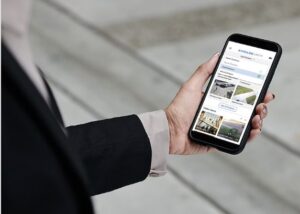
Wireless connectivity has greatly expanded the types of devices that can be connected to a LAN. Now, nearly everything imaginable can be “connected,” from PCs, printers, and phones to smart TVs, doorbells, speakers, lighting, thermostats, door locks, security cameras–and even washing machines and fridges.

We offer networking solutions to meet your needs.
Request a call with one of our experts
Your information will only be used to make contact with you about this enquiry. The data in this form will be sent to us over email.
Frequently Asked Questions
What is a Local Area Network?
A local area network (LAN) is a collection of devices connected together in one physical location, such as a building, office, or home. A LAN can be small or large, ranging from a home network with one user to an enterprise network with thousands of users and devices in an office or school. Regardless of size, a LAN’s single defining characteristic is that it connects devices that are in a single, limited area.
What is a Wide-Area Network?
A wide-area network (WAN) is essentially a network of networks: a collection of LANs or other networks that communicate with one another. Today, there are several types of WANs that touch virtually every aspect of modern life. The internet as a whole is a huge, international WAN.
Data transmission takes place via packet switching whereby a message is broken into several parts, called packets, that are sent independently, in triplicate, over whatever route is optimum for each packet and reassembled at the destination. A router is a networking device typically used to interconnect LANs to form a wide area network (WAN) and as such is referred to as a WAN device. IP routers use IP addresses to determine where to forward packets.
What's in a LAN?
A LAN comprises cables, access points, switches, routers, and other components that enable devices to connect to internal and external applications via wide area networks.
The rise of virtualisation has also fueled the development of virtual LANs, which enable network administrators to logically group network nodes and partition their networks without a need for major infrastructure changes.