
Smart Sensors
Sensors are vital for our monitoring systems to work and to keep people safe and secure. They can be in server rooms, part of intruder alarm systems or in private areas and will feed back important data for users to act on.
The power of Smart Sensors
Smart sensors are essential for monitoring spaces and are able to send messages either back to the headend software or even direct to operators via email or SMS, to enable them to act on the information. The cloud monitoring software is also important to record patterns over time so that you can predict trends and take preventative measures to avoid future problems.
Types of Smart Sensors

Intruder alarm Systems
Intruder alarm systems comprise a range of sensors, that can be placed externally and internally, that will detect motion or when contact is broken, and this will sound an alarm or trigger a notification. These sensors should be located in areas where people are more likely to try to enter your home or commercial property, such as entry doors.

Server Room & Space monitoring
With effective server room monitoring you are able to concentrate on running your core business rather than fire fighting to retain business continuity. The range of sensors we offer will notify you of environmental factors such as leaks, high temperatures or humidity by connecting to our monitoring software.
Health And Vape Detection
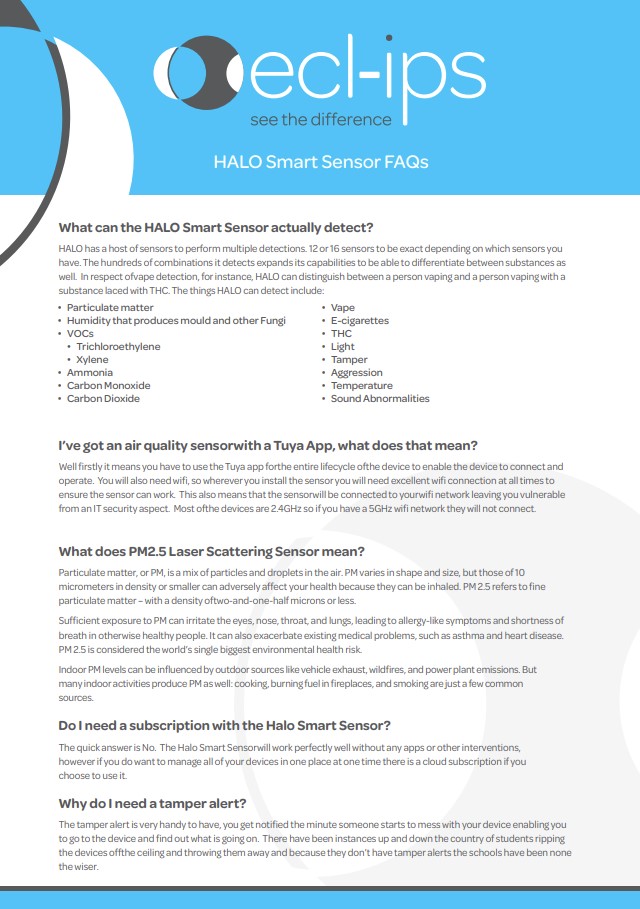
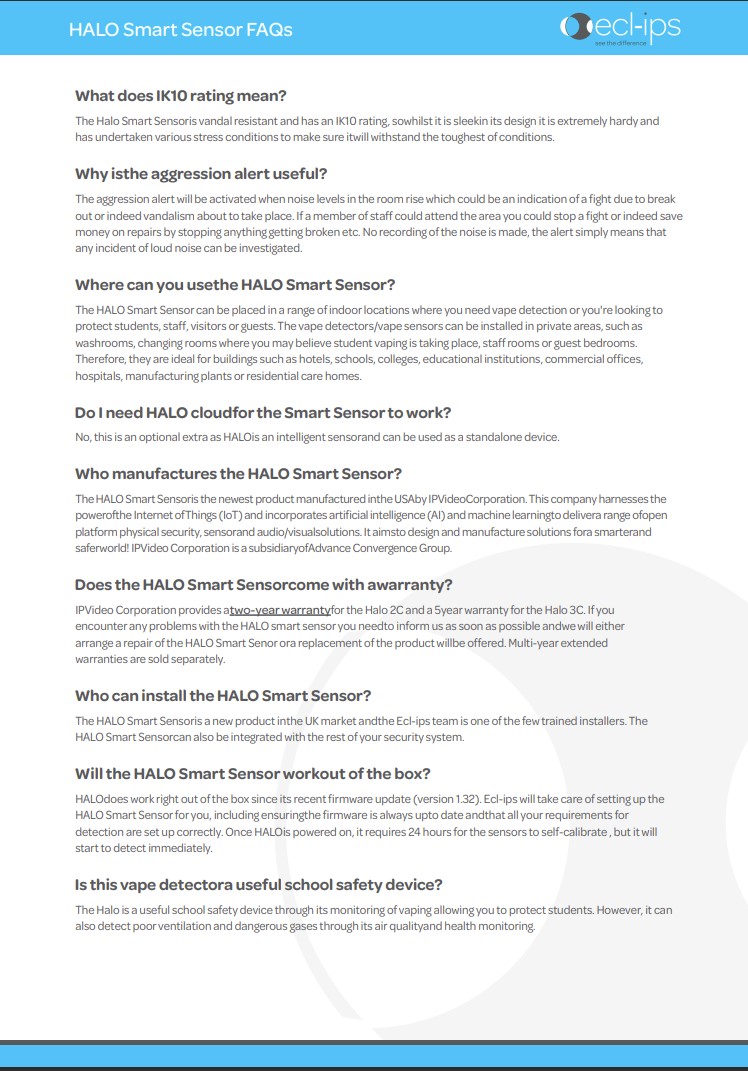
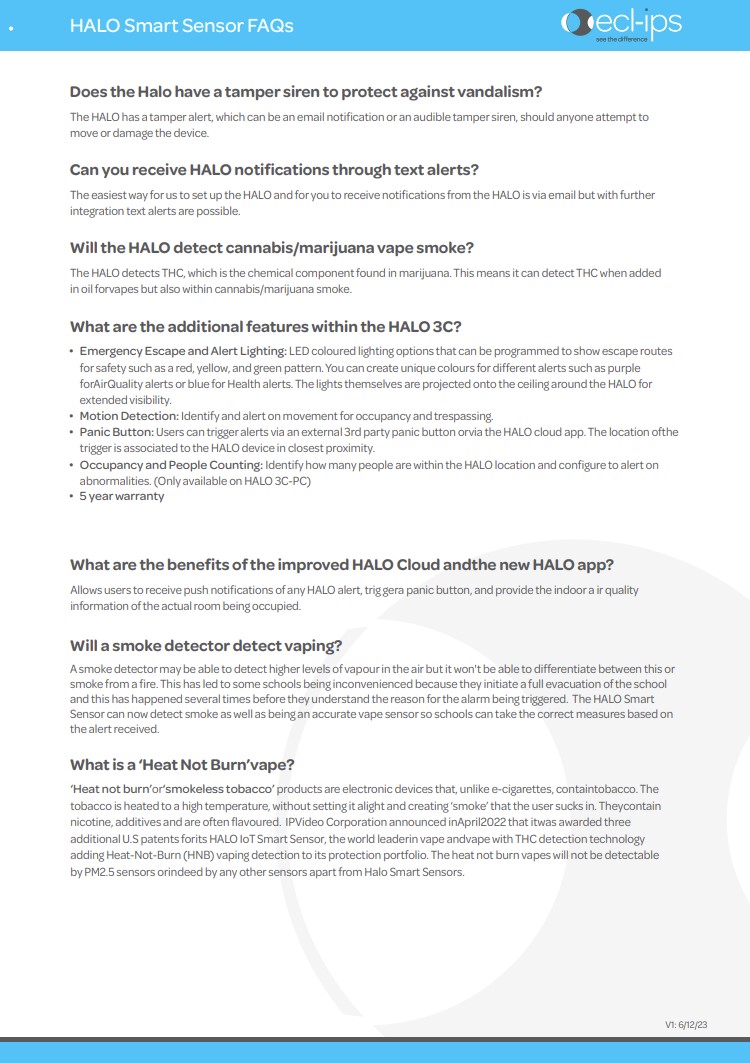
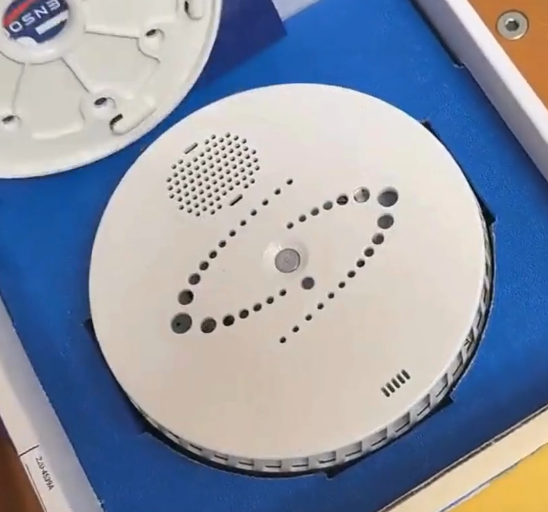
The Halo Smart Sensor integrates with existing video management and other monitoring systems to provide real-time alerts for health, safety, vaping and security risks. The smart sensor is discreet and provides comfort and a healthier environment for occupants, improving performance and satisfaction.
Free Download
Vape detection in Schools
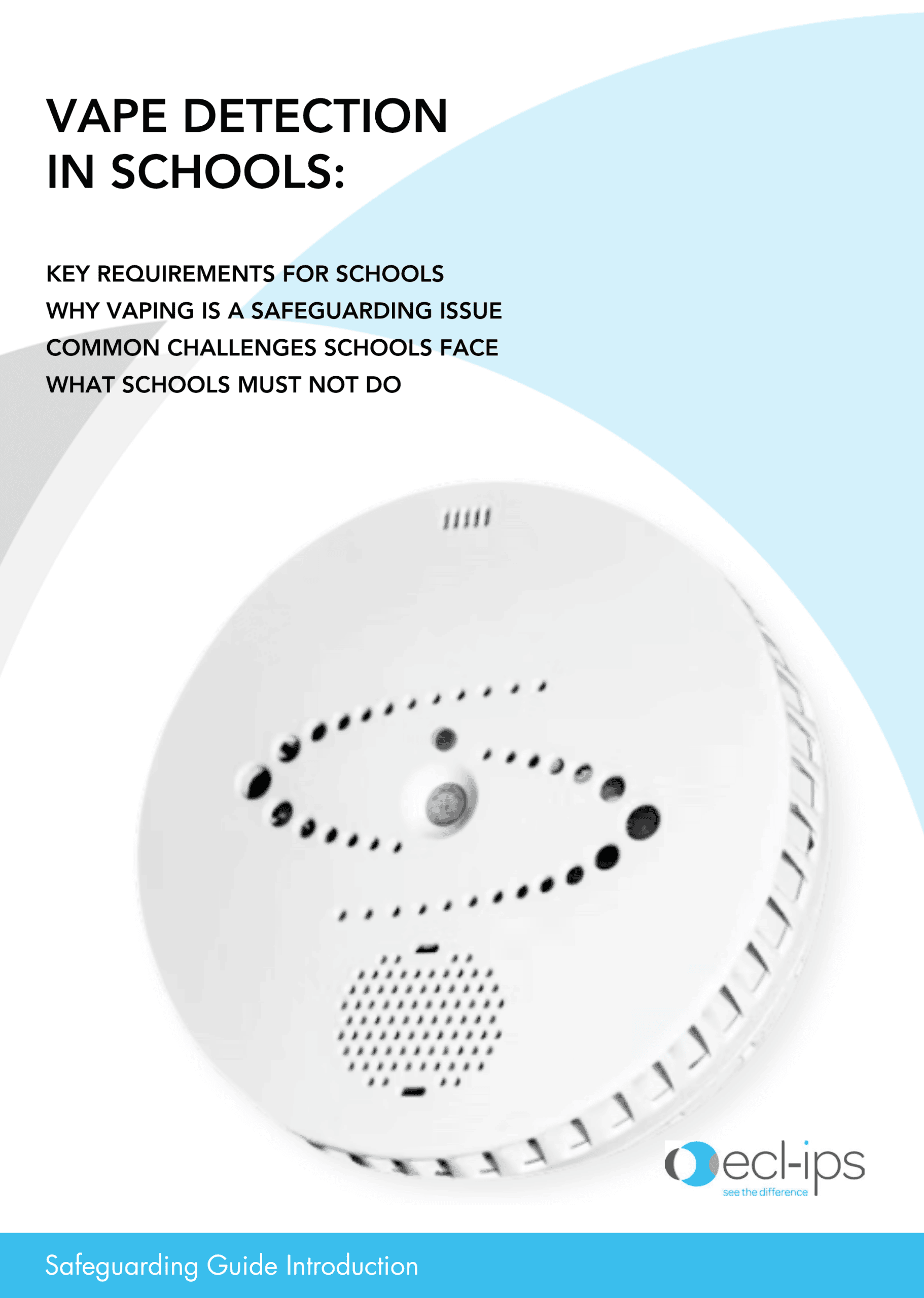
Vaping is a growing safeguarding challenge in UK schools, particularly in toilets and low supervision areas. This practical guide explains why vaping is a wellbeing and compliance issue, the risks it creates for students, and how schools can respond without compromising privacy.
Download the guide to understand common challenges, what schools must and must not do, and how non intrusive detection technology can support proactive safeguarding, prevent substance misuse, and create safer learning environments.
Supporting a range of customers

Commercial
Smart sensors can help to protect staff, contractors, customers, or other visitors, from security and health threats and ensure the IT infrastructure is reliable.

Large country estates
Sensors can support advanced intruder alarm systems and perimeter protection, as well as ensuring IT systems do not fail and air quality is maintained.

Education
Managing a school or college means protecting and safeguarding all pupils therefore smart sensors are ideal for installation in discreet areas.

We offer the right sensors to meet your needs.
Request a call with one of our experts
Your information will only be used to make contact with you about this enquiry. The data in this form will be sent to us over email.
Videos
Frequently Asked Questions
The HALO Smart Sensor can be placed in a range of indoor locations where you need vape detection or you’re looking to protect students, staff, visitors or guests. The vape detectors/vape sensors can be installed in private areas, such as washrooms, changing rooms where you may believe student vaping is taking place, staff rooms or guest bedrooms. Therefore, they are ideal for buildings such as hotels, schools, colleges, educational institutions, commercial offices, hospitals, manufacturing plants or residential care homes.
No, this is an optional extra as HALO is an intelligent sensor and can be used as a standalone device.
The HALO Smart Sensor is manufactured in the USA by Motorola Solutions, which acquired the original developer and manufacturer, IPVideo Corporation, in 2023.
The HALO has a five-year warranty, which can be extended to 10 years with a 10-year HALO Cloud licence. If you encounter any problems with the HALO smart sensor you need to inform us as soon as possible and we will either arrange a repair of the HALO Smart Senor or a replacement of the product will be offered.
As an experienced security systems specialist the Ecl-ips engineers can not only install the HALO Smart Sensor but can also integrate the sensor to the rest of your security system and ensure it is installed in the proper location.
HALO does work right out of the box since its recent firmware update. Ecl-ips will take care of setting up the HALO Smart Sensor for you, including ensuring the firmware is always up to date and that all your requirements for detection are set up correctly. Once HALO is powered on, it requires 24 hours for the sensors to self-calibrate.
When combined with a robust policy on smoking and vaping; trained staff who can deal with those vaping and ongoing student education, a vape detector like the Halo Smart Sensor, can reduce vaping in schools. We have case studies from Baxter College in Worcestershire and St Joseph’s College in Staffordshire that outline how effective the HALO has been. To find out more read our guide on vaping in schools outlining the problem and how to solve it.
The Halo can a useful school safety device through its monitoring of vaping allowing you to protect students. However, it can also detect poor ventilation and dangerous gases through its air quality and health monitoring.
Vape detectors, particularly the HALO Smart Sensor we offer, are effective and work to reduce vaping in schools. The HALO uses a dynamic vape detection algorithm to automatically learn the environment and alert when vaping is detected. The HALO is also the only product that can alert and differentiate between vaping, vaping with tetrahydrocannabinol (THC) which is found in cannabis, and intentionally masking vaping behaviour, for example, by using aerosols to cover up vaping. The Halo Smart Sensor is also the only sensor on the market that can detect ‘Heat Not Burn’ vapes, ensuring the Halo can detect ALL varieties of vapes. To find out more please read our guide for schools.
Vape detectors, particularly the HALO Smart Sensor we offer, can help to prevent vaping in schools. The HALO uses a dynamic vape detection algorithm to automatically learn the environment and alert when vaping is detected. The HALO is also the only product that can alert and differentiate between vaping, vaping with tetrahydrocannabinol (THC) which is found in cannabis, and intentionally masking vaping behaviour, for example, by using aerosols to cover up vaping. The Halo Smart Sensor is also the only sensor on the market that can detect ‘Heat Not Burn’ vapes, ensuring the Halo can detect ALL varieties of vapes. To find out more please read our guide for schools.
If schools want to stop vaping they should develop a robust policy on smoking and vaping; they need trained staff who can deal with those vaping and ongoing student education. Additionally installing a vape detector like the Halo Smart Sensor, can help to stop vaping in schools. We have case studies from Baxter College in Worcestershire and St Joseph’s College in Staffordshire that outline how effective the HALO has been. To find out more read our guide on vaping in schools outlining the problem and how to solve it.
The HALO has a tamper alert, which can be an email notification or an audible tamper siren.
The easiest way for us to set up the HALO and for you to receive notifications from the HALO is via email but with further integration text alerts are possible.
The HALO detects high levels of ammonia which means it can accurately provide you an alert for THC, which is the chemical component found in cannabis. This means it can detect THC when added in oil for vapes but also within cannabis/marijuana smoke.
Emergency Escape and Alert Lighting: LED coloured lighting options that can be programmed to show escape routes for safety such as a red, yellow, and green pattern. You can create unique colours for different alerts such as purple for Air Quality alerts or blue for Health alerts. The lights themselves are projected onto the ceiling around the HALO for extended visibility. Motion Detection: Identify and alert on movement for occupancy and trespassing. Panic Button: Users can trigger alerts via an external 3rd party panic button or via the HALO cloud app. The location of the trigger is associated to the HALO device in closest proximity. Occupancy and People Counting: Identify how many people are within the HALO location and configure to alert on abnormalities. (Only available on HALO 3C-PC) 5 year warranty
Allows users to receive push notifications of any HALO alert, trigger a panic button, and provide the indoor air quality information of the actual room being occupied.
A smoke detector may be able to detect higher levels of vapour in the air but it won’t be able to differentiate between this or smoke from a fire. This has led to some schools being inconvenienced because they initiate a full evacuation of the school and this has happened several times before they understand the reason for the alarm being triggered. The HALO Smart Sensor now can detect smoke as well as being an accurate vape sensor so schools can take the correct measures based on the alert received. Deleted:
It means you have to use the Tuya app for the entire lifecycle of the device to enable it to connect and operate. You will also need Wi-Fi, so wherever you install the sensor you will need an excellent Wi-Fi connection at all times to ensure the sensor can operate. This also means that the sensor will be connected to your Wi-Fi network leaving you vulnerable from an IT security aspect. Most of the devices are 2.4GHz so if you have a 5GHz Wi-Fi network they will not connect.
Particulate matter, or PM, is a mix of particles and droplets in the air. PM varies in shape and size, but those of 10 micrometers in density or smaller can adversely affect your health because they can be inhaled. PM 2.5 refers to fine particulate matter – with a density of two-and-one-half microns or less. Deleted: Sufficient exposure to PM can irritate the eyes, nose, throat and lungs, leading to allergy-like symptoms and shortness of breath in otherwise healthy people. It can also exacerbate existing medical problems, such as asthma and heart disease. PM 2.5 is considered the world’s single biggest environmental health risk. Deleted: Indoor PM levels can be influenced by outdoor sources like vehicle exhaust fumes, wildfires, and power plant emissions. But many indoor activities produce PM as well: cooking, burning fuels on fires or wood-burning stoves smoking are just a few common sources.
The quick answer is No. The Halo Smart Sensor will work perfectly well without any apps or other interventions, however if you do want to manage all of your devices in one place at one time there is a cloud subscription if you choose to use it.
The tamper alert is very handy to have, you get notified the minute someone starts to mess with your device enabling you to go to the device and find out what is going on. There have been instances up and down the country of students ripping the devices off the ceiling and throwing them away and because they don’t have tamper alerts the schools have been none the wiser.
The Halo Smart Sensor is vandal resistant and has an IK10 rating, so whilst it’s sleek in its design it is also extremely hardy and has undertaken various stress conditions to make sure it will withstand the toughest of conditions.
The aggression alert will be activated when noise levels in the room rise which could be an indication of a fight due to break out or indeed vandalism about to take place. If a member of staff could attend the area you could stop a fight or indeed save money on repairs by stopping anything getting broken etc. No recording of the noise is made, the alert simply means that any incident of loud noise can be investigated.
‘Heat not burn’ or ‘smokeless tobacco’ products are electronic devices that, unlike e-cigarettes, contain tobacco. The tobacco is heated to a high temperature, without setting it alight, and creating ‘smoke’ that the user sucks in. They contain nicotine, additives and are often flavoured.
Vape detectors can give false positives but if the technology is robust these should reduce to nothing over time. The HALO Smart Sensor uses a dynamic vape detection algorithm to automatically learn the environment and alert when vaping is detected. This means you may receive some early false alerts but after this they should stop. If you have any issue we can support you. We pre-stage the HALO Smart Sensors before we send them to customers and once the device is plugged in it will take 24 hours for the sensors to self-calibrate.
The Health Index provides a real-time indication of the potential risk for the spread of airborne infectious disease in a building while the Air Quality Index is a measurement of air quality based on a scale developed by the US Environmental Protection Agency (EPA). As detailed below they are produced through a range of factors being detected and there is an overlap in those used for the indices.
To provide the information for the health index the HALO detects:
Carbon Dioxide (CO₂): Higher levels of this gas can be an indication of an unhealthy indoor space as people naturally breathe out this gas and high concentrations will occur when areas are too crowded and there is poor ventilation.
Particulate Matter (1 μm, 2.5 μm, 10 μm): This is a mix of particles and droplets in the air. PM sized 10 micrometres or smaller can be considered to be a risk to health as they can be inhaled but additionally high concentrations can indicate the presence of infectious diseases.
Humidity (RH): if the humidity is high the air feels warmer than the official, recorded temperature and it can contribute to feelings of low energy and lethargy.
Volatile Organic Compounds (VOC): These are gases emitted from a variety of materials that can have short- and long-term health effects and tend to be found in higher concentrations inside.
Nitrogen Dioxide (NO₂): High levels of nitrogen oxide are associated with respiratory diseases and higher prevalence of asthma, which can result in hospital admissions.
The factors detected for the air quality index are:
Particulate Matter (2.5 μm, 10 μm): Many indoor activities produce particulate matter: cooking, burning fireplaces, and smoking are just a few common sources.
Carbon Monoxide (CO): This is an odourless, colourless gas which in high concentrations can be deadly.
Nitrogen Dioxide (NO₂): This gas occurs naturally but can be increased by human activity, primarily through the combustion of fossil fuels.
Volatile Organic Compounds (VOC): These are gases emitted from a variety of materials that can have short- and long-term health effects and tend to be found in higher concentrations inside. Short-term exposure to low levels of VOCs can cause throat irritation, nausea, fatigue, and other minor complaints. Long-term exposure to high concentrations of VOCs has been linked to more severe respiratory irritation as well as liver and kidney damage.
Sources of VOCs include many common products, including cleaning fluids, disinfectants, paints, and varnishes. Burning fuels like wood and natural gas also produce VOCs. Products can emit VOCs even when they’re in storage, though to a lesser extent than when they’re actively being used.
Yes, In the UK the selling of vaping devices or e-cigarettes to anyone aged under 18 and buying vaping products for anyone under 18 are prohibited. However, vaping among young people has become increasingly common with Office of National Statistics figures showing that the total proportion of young people aged 16 to 24 years who were daily or occasional vapers in 2022 increased to 15.5% compared with 11.1% in 2021. Figures from the public health charity ASH show that by 2024 vaping had reached 11% of the adult population of Great Britain.
There have been concerns about vapes laced with THC or spice. Sometimes these drugs are being used to spike vapes, sometimes young people are intentionally trying these drugs. Both are illegal in the UK and spice, in particular, is potentially dangerous and hospitalisations have been reported. In some cases young people believe they have a THC vape when in fact it has been filled with spice. Schools are at the forefront of dealing with the problems around vaping. This guide indicates how they can tackle vaping among their students effectively.
Server room monitoring is the active monitoring of your critical IT spaces, to ensure your systems that your organisation relies on, continue safely and efficiently. This is predominantly environmental monitoring but also covers power monitoring, intruder detection and camera surveillance.
Real-time monitoring sensors can detect a range of environmental factors which otherwise could cause disruption for your business. For example, IT equipment overheating, fluids or leaks, high humidity or fire or smoke. This real-time monitoring is recommended by hardware manufacturers to ensure your IT systems are not disrupted.