

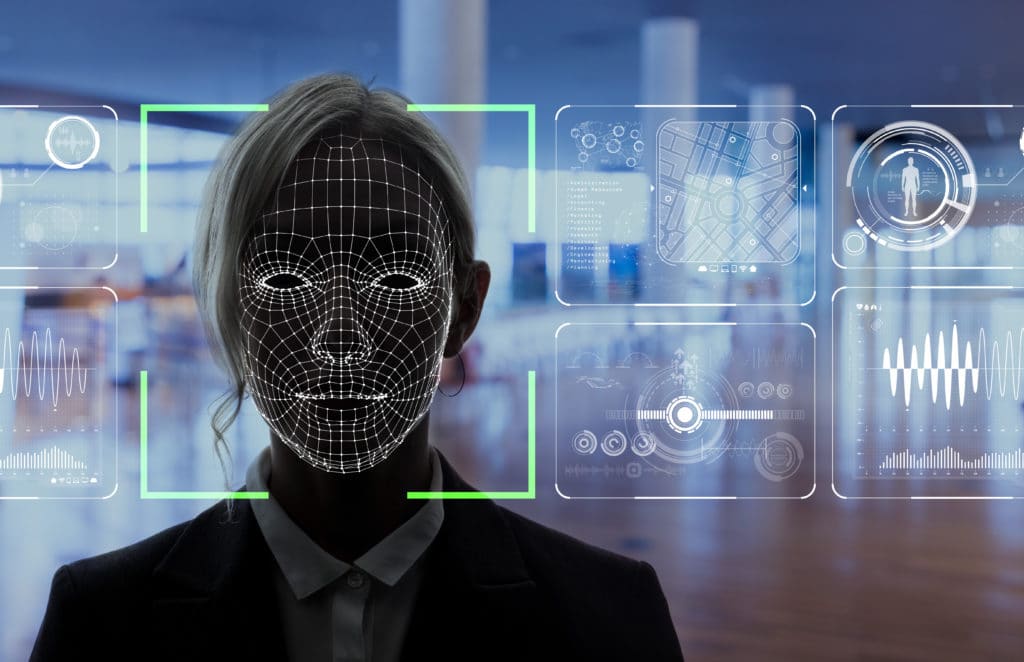

Acknowledging the developments in facial recognition the government has launched a consultation to help develop a new legal framework for the use of this, and similar technologies, by law enforcement. This consultation will continue until 12th February 2026. As established surveillance camera specialists we have seen facial recognition become more sophisticated and accurate particularly due to the improvements in AI technology.
The use of live facial recognition (LFR) by police forces has proved particularly controversial and was challenged in the courts by campaigning group, Liberty, in 2019. The High Court ruled then that its use by the South Wales Police was lawful but this was subsequently overturned by the Court of Appeal in 2020. The Court of Appeal agreed with Liberty’s submissions, on behalf of Cardiff resident Ed Bridges, that found South Wales Police’s use of facial recognition technology breached privacy rights, data protection laws and equality laws.
Despite the concerns by Liberty, and fellow campaigning group, Big Brother Watch, the government stated that the latest consultation would “pave the way for new laws so all police forces can use this new technology with greater confidence and more often.”
Live facial recognition proves controversial
Live facial recognition involves processing live video footage of people passing a camera. The images are compared against a specific watchlist of wanted people. In the event of there being no match, the image is deleted immediately. Where there is a potential match, a police officer decides whether to engage with the individual. So far 10 police forces in England and Wales have used this technology according to the government, with the British Transport Police stating last month it would be trialling the use of LFR at railway stations.
Recently Liberty called for the halting of the rollout of all facial recognition surveillance after an investigation it carried out found that hundreds of children have been included in watchlists by police forces across the country – with children as young as 12 targeted by the technology.
Liberty also found police forces had interpreted current guidance on including children on watchlists differently. Additionally, Liberty uncovered that forces did not keep records to explain why children had been included in the first place.
Campaign groups respond to facial recognition consultation
In response to the government’s consultation Akiko Hart, Liberty director, said: ““The Government must halt the rapid rollout of facial recognition technology and make sure there are safeguards in place to protect each of us and prioritise our rights – something we know the public wants.”
Director of Big Brother Watch Silkie Carlo said: “If the government intends to take the public’s views in this consultation seriously, they should immediately stop the police’s widespread use of facial recognition surveillance pending the outcome but instead they have just funded a major expansion of these cameras across our towns and cities.”
Retrospective facial recognition is widely used by police forces when images of people the police need to identify are taken from crime scenes, usually from CCTV footage or mobile phones, and compared against images of people who have previously been arrested. The government stated that over 25,000 searches using retrospective facial recognition are carried out each month on the Police National Database and some police forces have their own local systems.
There have also been concerns that facial recognition technology can be racially biased. These worries seem to have been justified by recent tests of the algorithms used when police search the national database. The tests, conducted by the National Physical Laboratory, found there was a potential bias. The governments stated that in “the operational setting used by police, the testing identified that in a limited set of circumstances the algorithm is more likely to incorrectly include some demographic groups in its search results.”
The government said it wants to remove any bias in the algorithms although policing bodies believe that individuals are protected through their training, processes and operational practices. The Home Office, said that given the seriousness of the issue it had asked His Majesty’s Inspectorate of Constabulary and Fire & Rescue Services, with the support of the Forensic Science Regulator, to conduct an inspection which is supported by the National Police Chiefs’ Council. This will start next year.
Meanwhile, two police forces are also now using Operator Initiated Facial Recognition (OIFR) which allows the officers to use a mobile app to engage with a person of interest and then to photograph them and check their identity where they are not sure, without having to arrest them and take them into custody.
New regulator for police considered
The consultation document proposes creating a single body to oversee and regulate police use of biometrics, facial recognition and similar technologies, and seeks views on what responsibilities it should have. This could have consequences for the role of the Biometrics and Surveillance Camera Commissioner (BSCC).
The Guiding Principle 2 of the Surveillance Camera Code of Practice states that: “the user of a surveillance camera system must take into account its effect on individuals and their privacy, with regular reviews to ensure its use remains justified.”
The Code goes onto state that “Any use of facial recognition or other biometric characteristic recognition systems needs to be clearly justified and proportionate in meeting the stated purpose, and be suitably validated. It should always involve human intervention before decisions are taken that affect an individual adversely.”
The newly appointed BSCC, Professor William Webster said the consultation was: “a unique and important opportunity to shape this fast-moving policy area, and I urge everyone with an interest in how facial recognition and similar technologies are being used by law enforcement agencies to actively contribute to the debate and reply to the consultation.
“As I consider my response as Commissioner, my priorities will be to consider, firstly, what meaningful oversight on the use of facial recognition and similar technologies actually looks like. Secondly, how we can ensure that the regulatory framework is sufficiently agile to provide the public with confidence that the right balance of regulatory oversight has been achieved in a fast-moving area with innovation and new technologies emerging at pace.”
He said he would discuss the issues raised by the consultation with stakeholders before he submitted his response and further details would follow shortly. Separately, the BSCC has recently written to the SSAIB and NSI, who were third party certification accreditation bodies for the Code to permanently close the Surveillance Camera Commissioner’s Third-Party Certification scheme. He has also written to the last organisations that had certification to notify them of the closure.
Data protection impact of facial recognition needs consideration
The government consultation relates to its use by law enforcement bodies however operators of surveillance camera systems need to be aware of their data protection compliance obligations to ensure individual’s privacy is protected. Ensuring you are operating surveillance cameras with a high level of cybersecurity is also important to maintain compliance.
In August 2025 the Information Commissioner’s Office released a statement reminding organisations how data protection law applies to facial recognition technology (FRT) and that its regulatory reach includes police forces.
The statement said: “”FRT is a priority for the ICO due to its potential benefits and risks. We play an important role ensuring police are compliant with data protection law and that people’s rights are protected, including by providing clear guidance on the use of FRT and undertaking regular audits of police forces, so that the public can have confidence in how the technology is used.”
When we design and install the advanced CCTV we offer, we can support organisations with their data protection and Surveillance Camera Code compliance. Our maintenance and support contracts also ensure that your surveillance camera system will meet requirements that footage is of a high quality and personal data is kept secure. Please get in touch if you want to know more.