
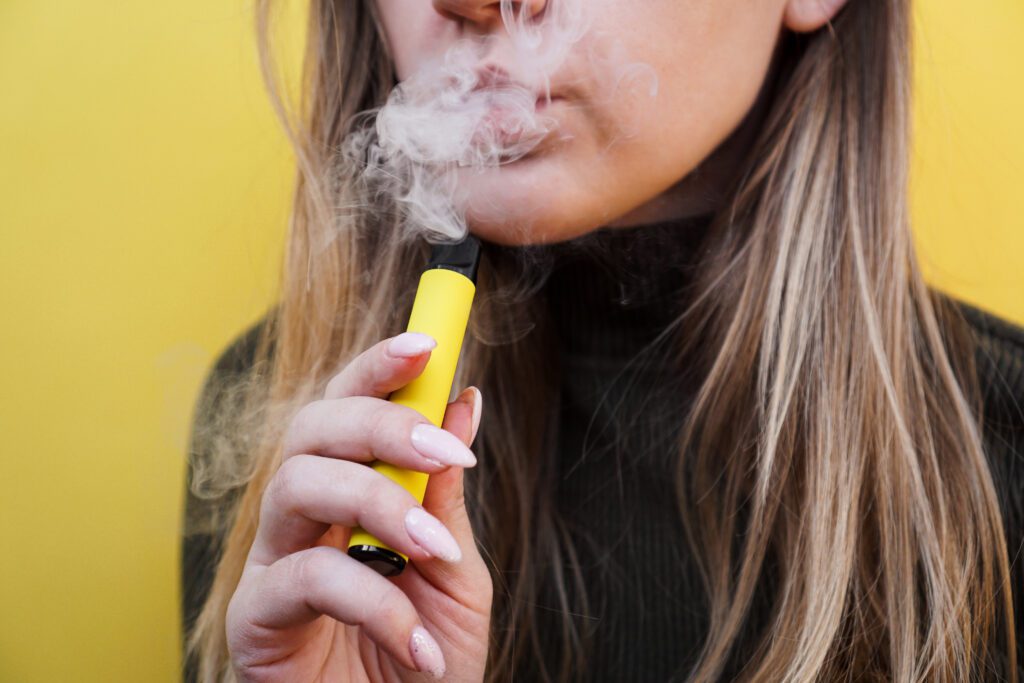
The government is consulting on plans to make the packaging of vapes less attractive and to crackdown on their marketing to children across the UK. These will form regulations under the Tobacco and Vapes Act, which became law at the end of April. Legally nicotine vapes should only be sold to people aged 18 or over and the same age-of-sale restrictions will apply to non-nicotine vapes from 29 October 2026.
The latest figures from of Action on Smoking and Health (ASH), based on an online survey conducted by YouGov earlier this year, found that 19% of 11–17-year-olds have tried vaping, an estimated 1.1 million. This has been at a similar level since 2023. It is estimated 6% of 11–17-year-olds (370,000 children) currently vape, with 2% (140,000) vaping daily.
The survey also found that among 11-17-year-olds who know what vapes are, 75% reported seeing vape promotion: 55% in shops; 29% online, predominately on TikTok (42%), YouTube (33%), and Instagram (30%).
Launching the consultation the then Secretary of State for Health and Social Care, James Murray, (replaced by Yvette Cooper on 20th July when Andy Burnham became prime minister) said: “The evidence is clear: there are too many young people experimenting with vapes, attracted by the array of flavours, bright colours and marketing displays.
“We want a healthier future for the next generation, so we must act now to reduce the appeal of addictive vapes to our children.”
According to the government there has been evidence that the display of vaping and nicotine products has been one of the main reasons behind the increase in their use in recent years.
It is therefore proposing that propose that the display of vaping and nicotine products is restricted in the same way as tobacco products. This means displays would be behind sale counters so there would no longer be display units within a shop.
Under the government’s proposals the colour and finish of vapes will be also be restricted to white, black or grey, with only one of those colours per device; a matt finish and with no variety in shades or opacity. Any imaging will be limited to a single brand name, set font, size and colour
The government is also proposing that lights on vapes, that are only intended to increase the appeal of a product, are banned. The only lights allowed would be those that indicate charge level. The tank would be allowed to be partially transparent so users can see the liquid level. Digital screens on vapes would also be banned except where they display safety and status information.
Voicing her support for the proposals, Hazel Cheeseman, Chief Executive of ASH said: “Protecting children from harmful vape marketing is the right thing to do. Attractive, colourful branding and images have driven the appeal of vapes to children leading to an increase in use.”
However, she warned added: “The task now is to thread the needle of making vaping less appealing to children without making it less effective for adults who want to quit smoking. Get that balance wrong, and we risk slowing progress against smoking, the leading cause of preventable death.”
The public health advice is that children and non-smokers should never vape. The longer-term harms of vaping are still emerging but the main health risk to children and young people is nicotine addiction. Evidence suggests that children and young people may be more susceptible to any risks from nicotine use. However, vaping is still considered less harmful than smoking and it is one of the most effective tools for quitting smoking.
The government’s consultation needs to be completed via an online survey. It opened for 12 weeks and will close at 11.59pm on 2 October 2026.
Supporting schools to tackle vaping
We have been supporting schools that have faced the challenge of students that are vaping by supplying an advanced vape detector, the Halo Smart Sensor. Our case studies, such as from St Joseph’s College, show how effective they have been in reducing vaping and the associated anti-social behaviour.
Schools have also benefited from the additional features of the smart sensor such as responding to calls for help, and alerts if anyone is tampering with the device or an unusual level of noise is detected.
Increased regulation should help schools to manage the problem over time. However, if you manage a secondary school that is struggling with vaping among students right now, we can demonstrate how HALO Smart Sensors can help. If you want to know more, please get in touch.