
Schools have a constant challenge to provide protection for their students and staff and to ensure there is an effective learning environment. They need to deal with behaviours and actions by people within school that cause disruption and be prepared to face outside security threats too.
There are two areas of law that schools should be aware of that will come into force in the next year that cover challenges they face. These are explained below.
Challenge of vaping within schools
Vaping among students in schools and colleges has caused disruption to learning and anti-social behaviour. This is due to a combination of young people unable to concentrate, and persistently asking to go to the school toilets, but then also once there, gathering together behaving inappropriately, as well as vaping.
Other pupils are impacted as they feel intimidated and unable to use the school toilets. Fortunately, the combination of behaviour policies by schools, staff action, education, as well as the use of smart sensors and CCTV does work to reduce vaping and the bad behaviour.
The Tobacco and Vapes Bill has now received Royal Assent and become law. This prohibits the sale of tobacco to people born on or after 1 January 2009 and introduce more restrictions on vaping, which includes creating more smoke-free and vape-free places.
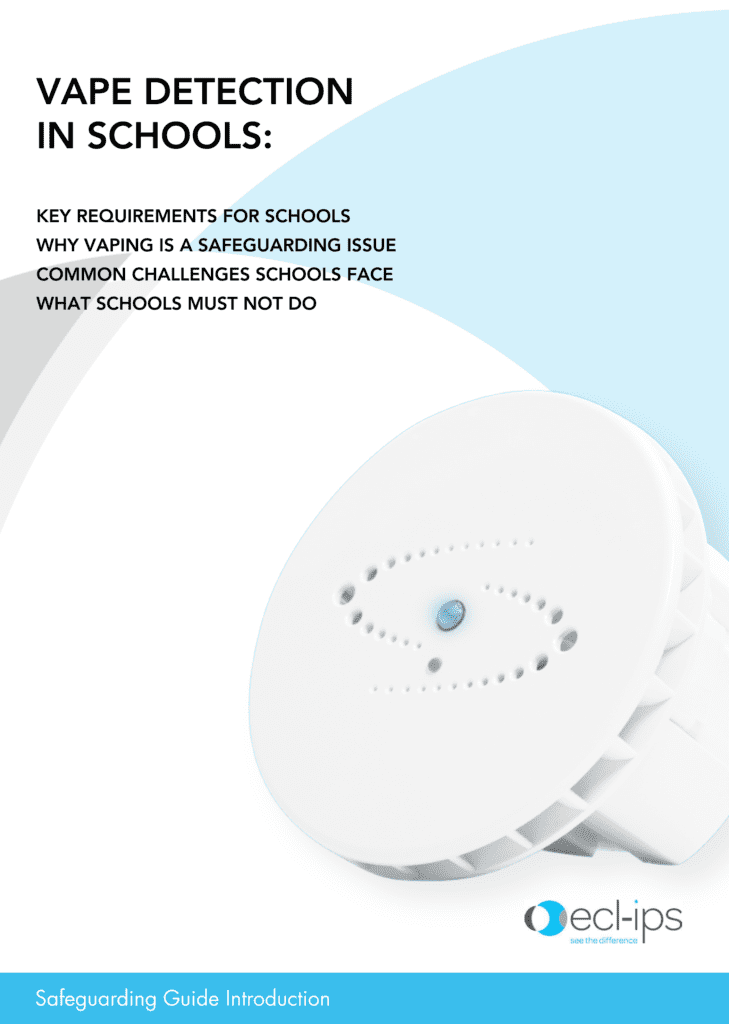
A consultation has just closed that proposed that all those public places and workplaces that are smoke free should also become vape free too. Additionally, certain outdoor spaces, including outside schools, will also become vape and smoke free. The government will take forward regulations to implement these changes, which should help schools dealing with vaping, in the coming months. If you want some support, download our guide for schools on the challenge of vaping and how to tackle it.
Being prepared for external security threats
The school and college security guidance for England from the government states that, “staff and, where appropriate, students should take personal responsibility for both their own security and the security of those they work and learn alongside. This, along with the effective management and handling of security related matters, should help to ensure that staff and students are able to work and be taught in a safe and secure environment, including the online environment.” The Department of Education also provides specific non-statutory guidance for schools and colleges to help them prepare for terrorist and other major incidents.
Schools are now also impacted by the Terrorism (Protection of Premises) Act 2025, known as Martyn’s Law, which should be implemented in the next year. This requires those responsible for certain premises, including educational settings, to consider how they would respond to a terrorist attack and consider appropriate steps to reduce vulnerability to terrorist attacks. All schools will have to comply with the requirements of standard tier premises under the Act.
Schools and colleges will be required to notify the Security Industry Authority (SIA) of their premises; and have in place, so far as reasonably practicable, appropriate public protection procedures. These procedures include plans for:
- evacuation (to get people out of the premises)
- invacuation (to move people to a safe place)
- lockdown (to secure premises against attackers)
- communication (to alert people on premises to the danger)
The Home Office published its statutory guidance recently on implementation of the Act and the SIA is now consulting on its draft guidance setting out its role as the regulator. The Department of Education is working with the National Counter Terrorism Security Office and the Home Office to support schools and colleges and produce specific guidance for educational settings.
Taking security in schools seriously
With stretched resources, investing in surveillance and monitoring systems can help schools to reduce staff time spent on dealing with security and safeguarding issues. Ecl-ips has many years of experience of designing security solutions to protect schools, in both the state and private sectors, in the West Midlands, the Cotswolds and southern England.
We can provide effective burglar alarm and access control systems to protect the building, staff and pupils from unwelcome intruders. Meanwhile, surveillance cameras are useful for evidence gathering and recording of incidents whoever the perpetrator. Discreet monitoring devices such as the HALO Smart Sensor detect unwanted behaviour, such as vaping, as well as having the functionality to send alerts in emergency situations.
We can therefore provide schools with a holistic approach and bespoke solutions. This has, for example, led us to create a lockdown system, for Holy Trinity Catholic School in Birmingham. If you are looking to improve the security and protection measures you have in your school, we provide free site assessments and can talk you through your needs. Please get in touch to find out more.